
SV / CA Club identity system
Designing Identity,
Building Belonging
Silicon Valley Eagles and Admiral bring more than a century of football design tradition into the modern identity of an ambitious youth academy.
On any weekend morning in Northern California, you’ll find dozens of youth soccer matches unfolding across the fields of Silicon Valley. Parents gather along the touchline with coffee in hand, coaches call instructions from the sidelines, and players sprint across the grass chasing the same ball that has inspired generations before them.
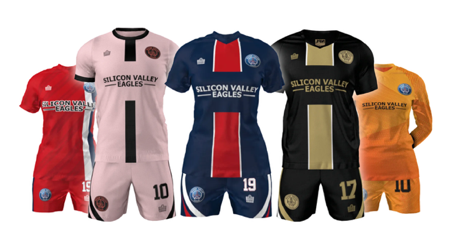
Among those teams, the players of the Silicon Valley Eagles now step onto the field wearing something new: a set of custom kits created with Admiral Sports that bring together more than a century of football design tradition with the modern identity of an ambitious youth academy.
At first glance, the shirts stand out immediately. A bold stripe anchors the center of the jersey, creating a strong visual spine that runs through the shirt. It’s clean, confident, and unmistakable from across the field.
But like many of football’s most iconic designs, the story behind the Eagles kits runs much deeper than the fabric itself.
ARCHIVE / 1970s A visual lineage
A Design Language Built Over Generations
Football kit design has always evolved slowly, ideas passing from one generation of clubs to the next. Stripes, sashes, and bold color blocks have defined the visual identity of teams across the world for more than a hundred years.
The Eagles kits draw on that same lineage.
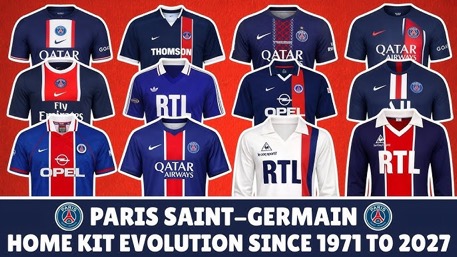
The central stripe that defines the home shirt echoes one of the most recognizable visual identities in the modern game: the famous “Hechter stripe” introduced in the 1970s at Paris Saint-Germain by fashion designer Daniel Hechter. By anchoring the club badge and colors within a single vertical column, the design created a look that was instantly recognizable, something that has influenced kit design ever since.
Across Europe, clubs have used similar principles to build their identities. The powerful vertical striping of AC Milan and the bold reinterpretations seen in modern kits from Juventus have all contributed to a design language that football fans instinctively understand.
For the Silicon Valley Eagles, the goal was not simply to imitate these traditions, but to reinterpret them in a way that felt modern and relevant to a youth club in California.
The result is a set of jerseys that feel rooted in football heritage while looking unmistakably forward.
EUROPE × USA Structure meets clarity
Where European Tradition Meets American Sports Design
One of the most distinctive aspects of the Eagles kit system is how it blends two different sporting cultures.
European football kits have historically emphasized heritage, colors, stripes, and patterns that connect clubs to their past. American sports uniforms, by contrast, tend to prioritize clarity and bold branding, with designs built around strong central graphics and clear visual hierarchy.
The Eagles shirts combine both approaches.
The vertical stripe acts as a traditional football identity marker, while the overall structure of the shirt reflects the clean, confident presentation often seen in American professional sports. The club’s name, badge, and colors are arranged in a way that is easy to recognize from the sidelines and unmistakable in motion.
The effect is at once classic and contemporary, a design language that sits naturally within the global game while reflecting the particular energy of the American soccer landscape.
SYSTEM / 03 Three expressions
Three Kits, One Club Story
The Eagles project was never intended to be just a single jersey. From the beginning, the goal was to create a complete kit system that could unify the club visually across every level of play.

The visual anchor
The home kit anchors the identity, built around the bold central stripe that defines the Eagles look on the field. It is the shirt players will most closely associate with representing their club.
A quiet signature
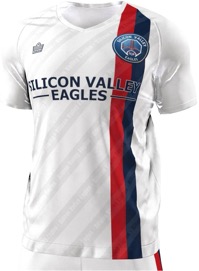
The away kit takes a slightly different direction. Built on a crisp white base, it introduces a sash element that runs through the shirt. Within that sash sits a subtle detail that reveals itself only on closer inspection: a repeating watermark of the club’s name woven into the design. From a distance it reads as a clean graphic stripe; up close it becomes a quiet signature of the club itself.

Same design family
The NPL and ECNL kits continue the same visual logic, ensuring that the club’s highest competitive teams remain part of the same design family. Whether a player is just beginning their journey or competing at the top levels of youth soccer, the identity of the club remains consistent.
Seen together, the three kits form a single, coherent visual system, one that makes clear to every player, from the youngest age group to the most competitive squad, that they are part of the same club story.
PLAYER PATHWAYS Keeping joy in the game
The Challenge Facing Youth Soccer
For the coaches and leaders of the Silicon Valley Eagles, that sense of unity reflects something deeper about the club’s philosophy.
Modern youth soccer is increasingly shaped by the logic of progression, moving from one level to the next, competing for places on elite teams, pursuing the narrow pathway toward the professional game. That structure has real value in identifying talent. But it also generates pressure that many young players, in time, find hard to sustain.
Participation studies across the world show a consistent pattern: as players grow older, many leave organized sport entirely. Some lose confidence when they fall short of elite selection. Others find that the joy which first brought them to the game quietly fades beneath the weight of expectation.
The Eagles are candid about this challenge. Their philosophy places equal value on development, enjoyment, and long-term participation. Competition matters, but it is not the only measure of success.
For the club, the deeper goal is to help players build a lifelong relationship with football, whether that journey leads to elite competition, college soccer, or simply a lasting love for the game.
05 / BELONGING More than fabric
Why the Shirt Still Matters
In that context, something as simple as a football kit can carry a surprisingly meaningful weight.
For young players, pulling on a team shirt often marks the moment they begin to feel part of something larger than themselves. A strong visual identity reinforces the sense that the club stands for something shared, a community of players, coaches, and families bound together through the game.
It was one of the reasons the Eagles invested so carefully in their kit design. The shirts are meant to feel distinctive and professional, giving every player a genuine sense of pride each time they step onto the pitch.
It is a small thing, perhaps. But it carries real emotional weight for young athletes.
When players feel proud of the club they represent, the entire experience of the game shifts.
Supporting Clubs at Every Level
The collaboration also reflects the broader philosophy of Admiral Sports.
While some of football’s most famous kits have been worn in the world’s biggest stadiums, the true foundation of the sport has always existed in grassroots clubs and community programs. These are the places where players first learn the game, where teams are built around friendship as much as competition, and where the culture of football continues to grow.
For Admiral, working with clubs like the Silicon Valley Eagles is part of supporting that wider ecosystem.
Because the strength of the game does not come only from those few who reach the very top. It comes from the millions who play for the love of it, week after week, season after season.
FULL TIME / 07 The story continues
A Shirt That Tells a Story
Seen from across the field, the Eagles kits are striking in their simplicity: a bold stripe, strong colors, clean lines.
Yet behind that simplicity lies a story that reaches from the design traditions of European football to the evolving culture of youth soccer in America. It is a story about identity, belonging, and the enduring pull of the game itself.
For the players who pull on the shirt, that story begins fresh every time they step onto the pitch.
And for the Silicon Valley Eagles, it is only just beginning.